
This checklist is a starting point for owners, facility managers and safety teams. The site’s approved plans, processes, materials and applicable requirements determine the final fire safety arrangements.
1. Identify the site’s fire hazards
List the raw materials, finished stock, packaging, fuels, gases, chemicals, process equipment and hot surfaces present. Note where combustible dust, flammable liquids, gas cylinders or heat-producing operations may be involved. Keep the risk review current when the process or storage layout changes.
2. Review storage and housekeeping
- Keep aisles, exits, electrical rooms and fire equipment accessible.
- Store combustible stock away from ignition sources and maintain the clearances required by the approved design.
- Remove packaging waste and accumulated dust through a planned housekeeping routine.
- Keep flammable liquids and gases in the approved storage areas with suitable controls.
3. Control hot work and ignition sources
Use a permit and control process for welding, cutting, grinding and other hot work. Identify nearby combustible material, protect openings, provide suitable fire watch arrangements where required and inspect the area after the work is complete. Keep temporary electrical connections and charging areas under control.
4. Check installed fire protection systems
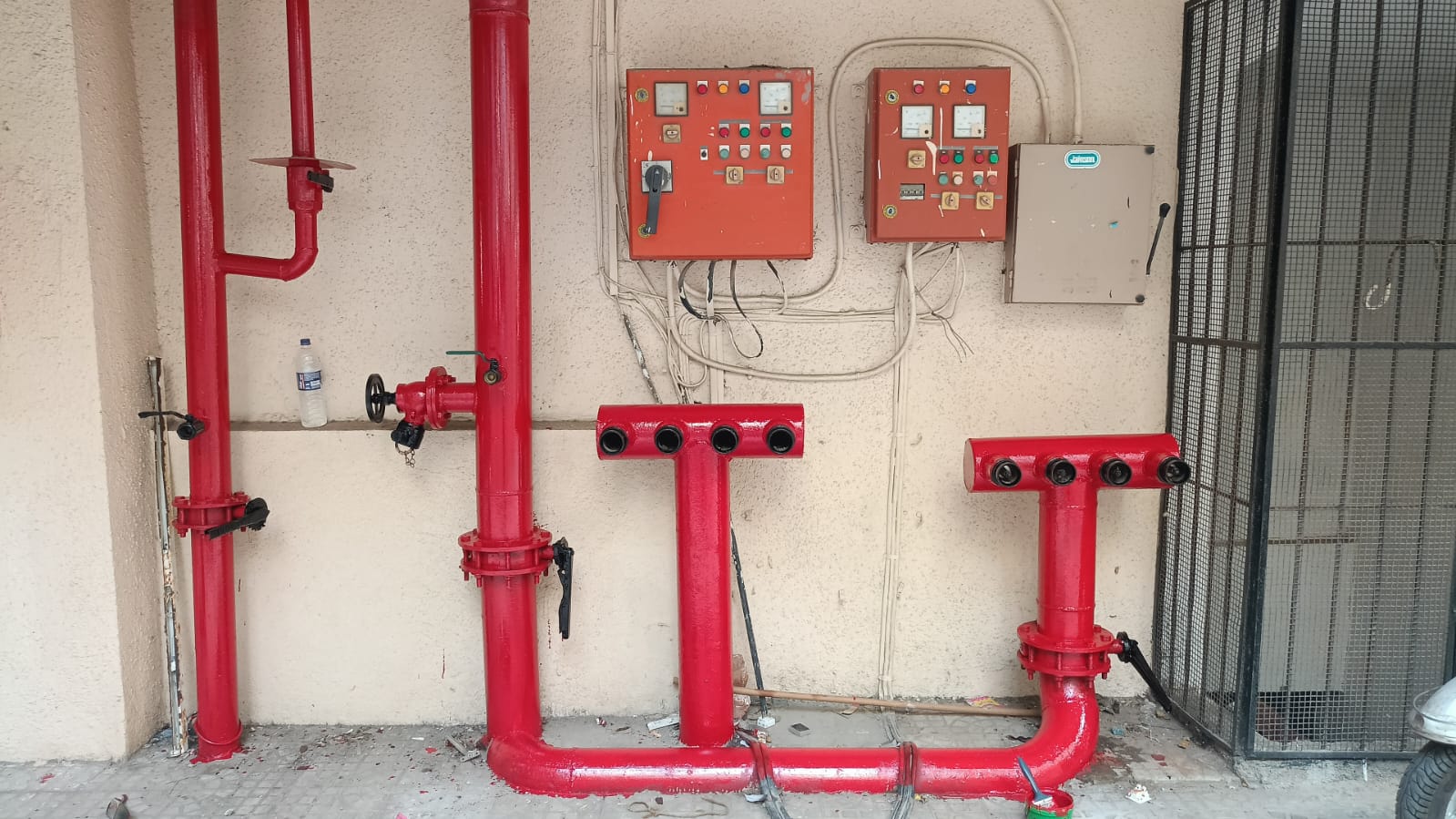
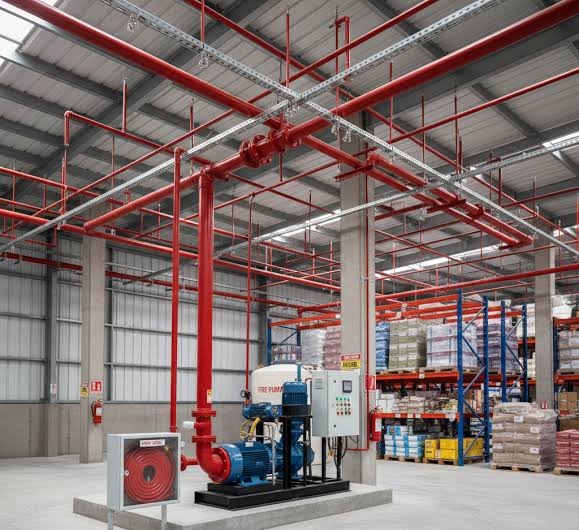
Review the systems provided for the particular site: hydrants, risers, sprinklers, pumps, fire alarm panels, detectors, manual call points, suppression systems, extinguishers and passive protection. Confirm that they are accessible and that the maintenance provider records testing, defects and corrective action.
5. Match extinguishers to the risks
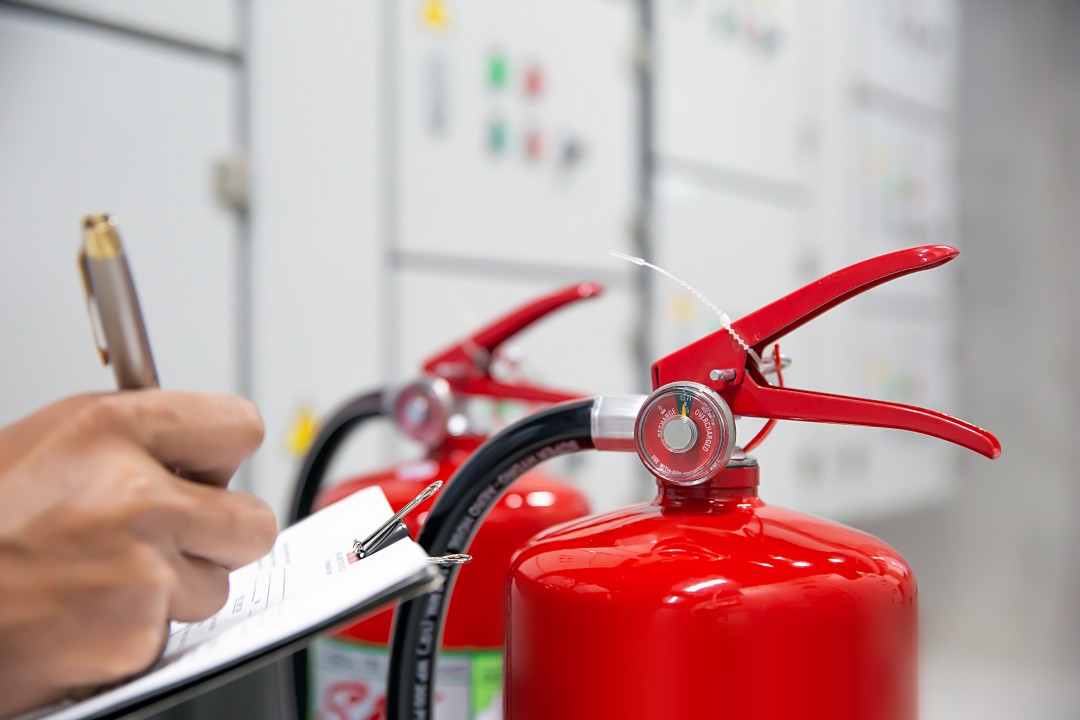
Different areas may need different extinguisher types. Consider the materials and equipment in the area and follow the approved fire plan, extinguisher label and competent advice. Do not choose a general-purpose extinguisher without checking whether it is suitable for the hazard.
6. Check exits, signs and access
Keep emergency exits, stairways, exit doors and fire service access routes clear. Check that fire doors are not held open and that signs and emergency lighting are maintained. Make sure workers and contractors know how to raise the alarm and where to assemble.
7. Train workers and contractors
Provide site-specific instruction on raising an alarm, evacuation routes, assembly points, reporting hazards and the safe use of equipment. Fire drills and equipment demonstrations should be planned and supervised by competent people. People should evacuate when a fire is growing or the route is unsafe rather than trying to fight it.
8. Keep test and maintenance records
Keep equipment registers, AMC/work orders, inspection and test reports, alarm fault logs, pump records, extinguisher service details, training and drill records, and corrective action logs. Make sure open defects have an owner and target date.
Important note
A generic checklist cannot confirm statutory compliance for a factory or warehouse. Use the current applicable rules, approved fire plan, relevant standards and directions from the competent authority. The Maharashtra Fire & Emergency Services website publishes the State’s fire-safety legislation and rules.
Need a fire safety review for an industrial site?
Samarth Fire can discuss fire alarm and fire fighting systems, equipment supply, maintenance, site reviews and staff training for industrial premises.
This article is general information. It is not legal advice, an emergency-response instruction, a substitute for approved site drawings or a fire-safety certificate. Requirements depend on the building, its occupancy and the current rules of the competent authority — always confirm with the Directorate of Maharashtra Fire & Emergency Services or a licensed agency.