
Industrial fire safety training should connect the equipment on site with the actions workers are expected to take. A factory, warehouse, utility plant and construction site may have different fuels, machinery, access routes and emergency procedures. Begin with the site risk assessment and approved emergency arrangements.
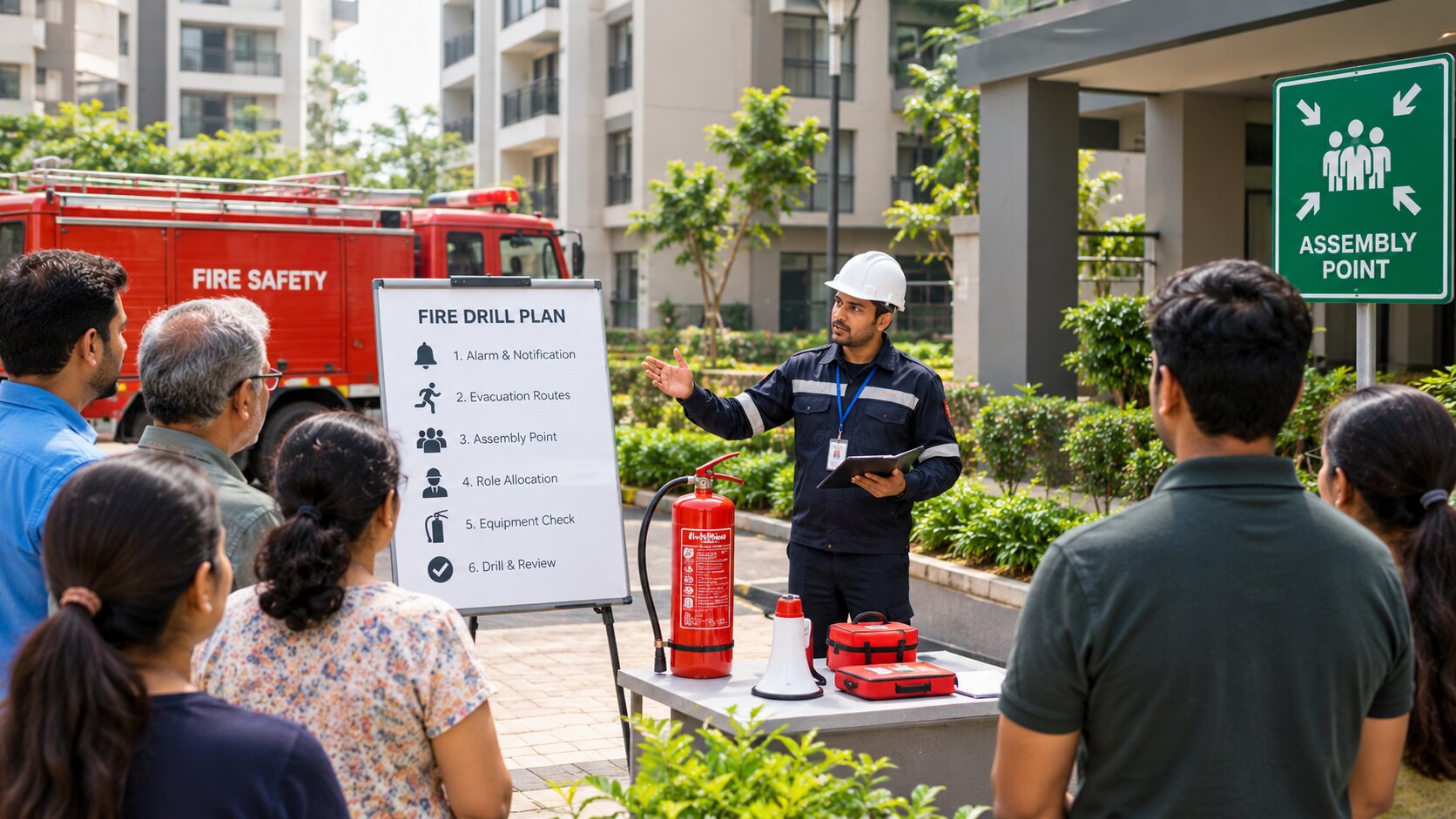
1. Explain how to raise the alarm
Workers should know how to report smoke, heat, a burning smell or another emergency, where manual call points are located where installed, who receives the alarm and how to contact emergency services. Explain what the different alarm indications mean for the site.
2. Show the evacuation routes and assembly point
Walk through the designated exits, staircases, final discharge routes and assembly point. Explain the site’s process for headcounts and how supervisors report missing persons. Keep routes and access for emergency responders clear.
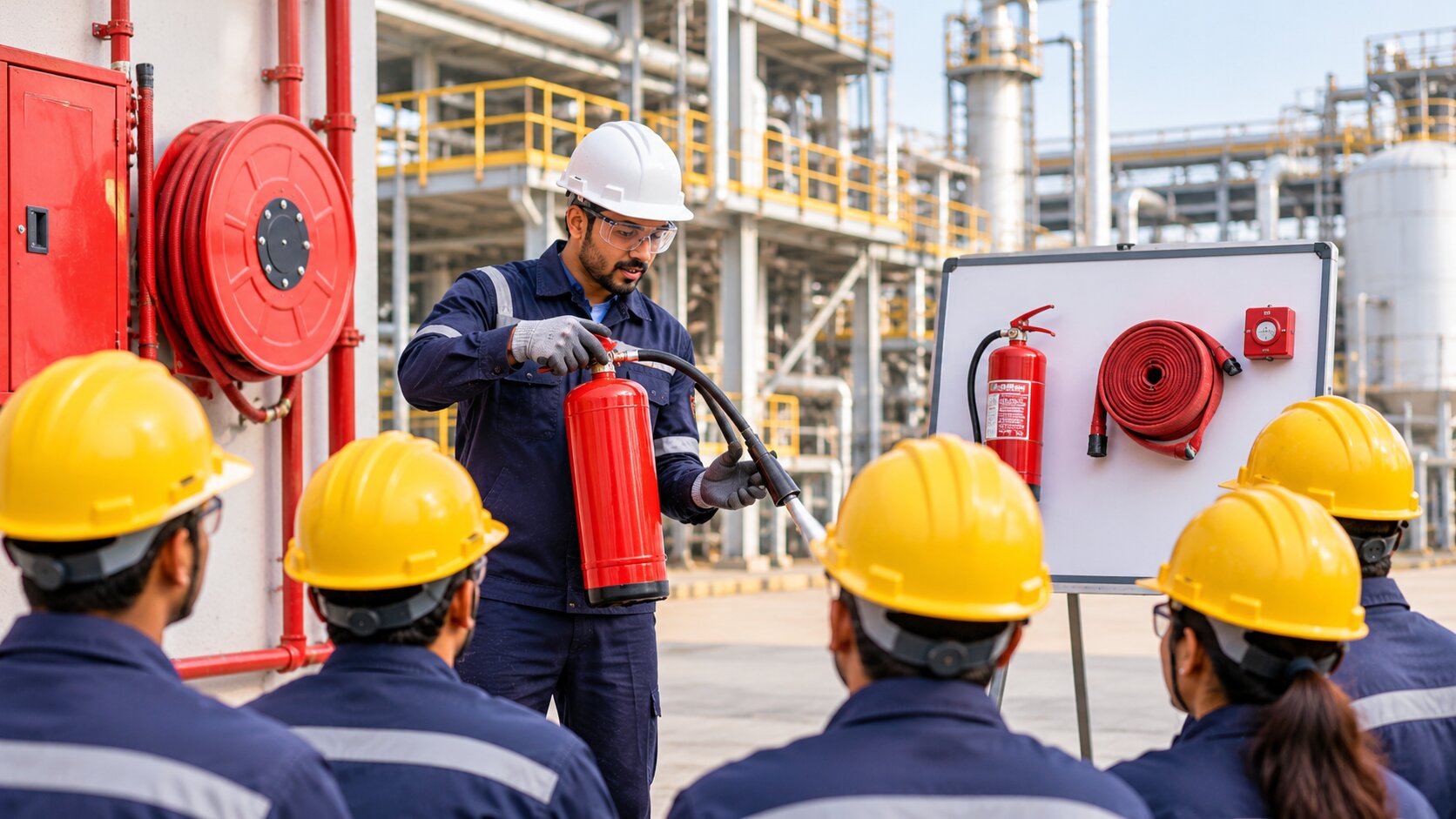
3. Explain the equipment installed at the site
Identify the types and locations of extinguishers, hydrants, hose reels, sprinklers, fire alarm equipment and any special suppression system. Explain what equipment is intended for which risk and what should be left to trained responders. The operating instructions on the equipment and the site fire plan take priority over a generic demonstration.
4. Keep demonstrations controlled
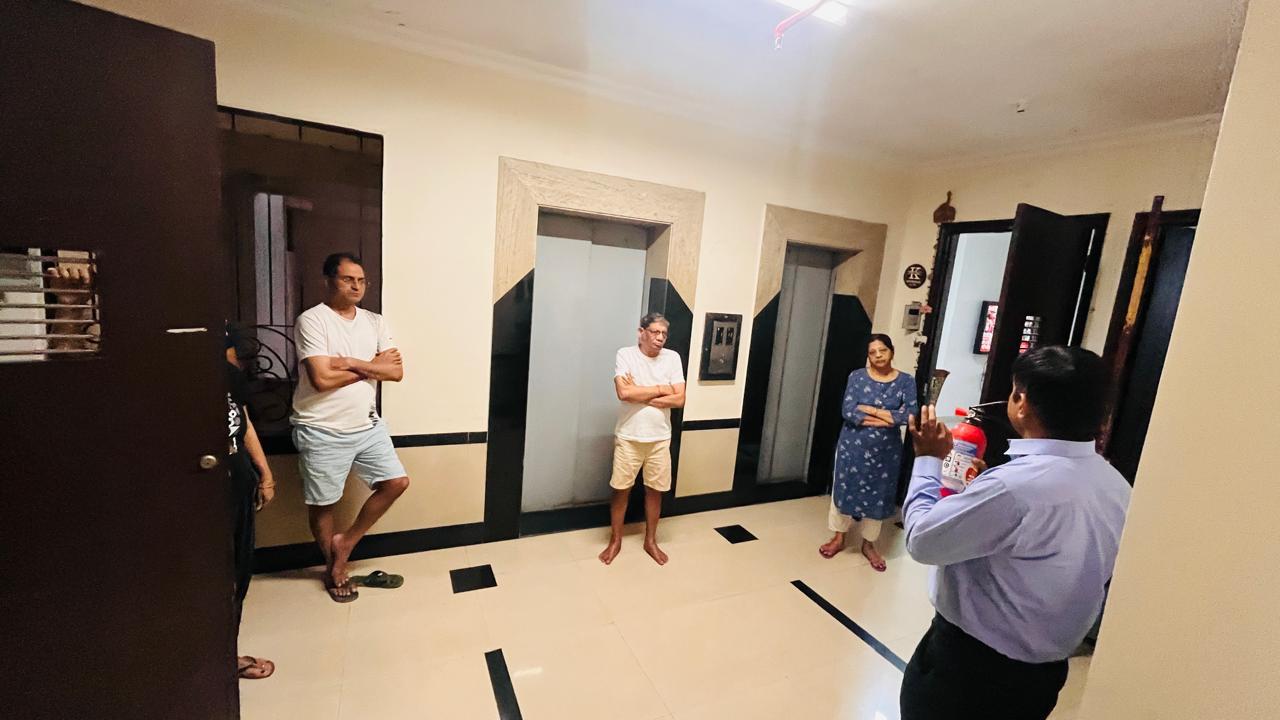
Practical extinguisher demonstrations should be planned, risk-assessed and supervised by competent instructors. Participants need clear instructions, appropriate practice space and a safe escape route. Do not use a live fire or discharge equipment casually as part of an ordinary toolbox talk.
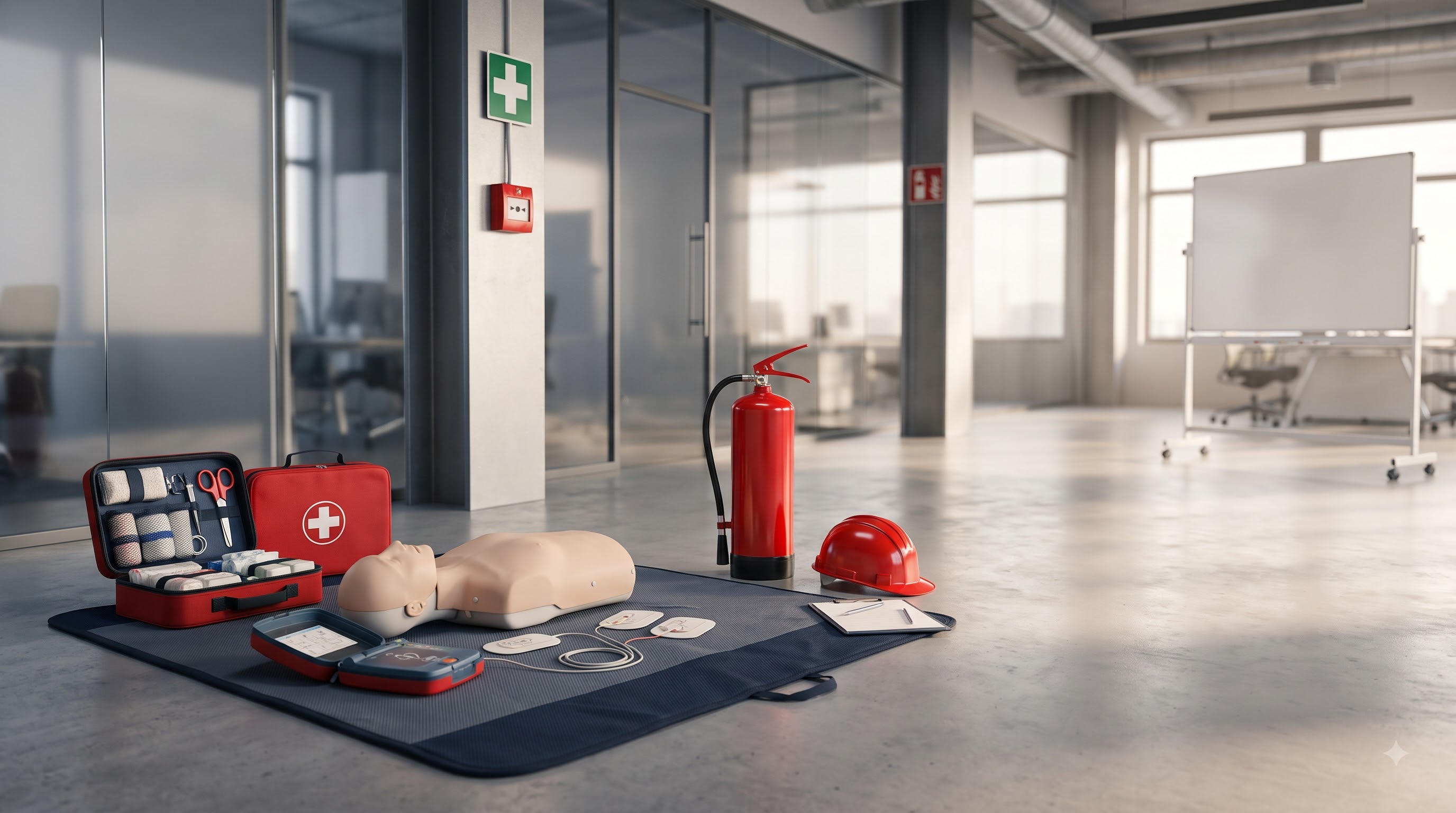
5. Include first aid and emergency roles
Discuss how to call for help, who provides first aid within their training and how the site coordinates with emergency responders. CPR or first aid practice should use the correct training equipment and be supervised by an appropriately qualified trainer.
6. Record the session and review it
Keep the date, topics, instructor details, attendance and any action items. Review the training after a change in plant layout, work process, staffing or emergency plan. Training supports the fire protection system; it does not replace equipment maintenance or statutory inspections.
Plan a safety session for your workforce?
Samarth Fire provides fire safety demonstrations, drills and first aid/CPR training. Discuss your site type, audience and training goals with the team.
This article is general information. It is not legal advice, an emergency-response instruction, a substitute for approved site drawings or a fire-safety certificate. Requirements depend on the building, its occupancy and the current rules of the competent authority — always confirm with the Directorate of Maharashtra Fire & Emergency Services or a licensed agency.