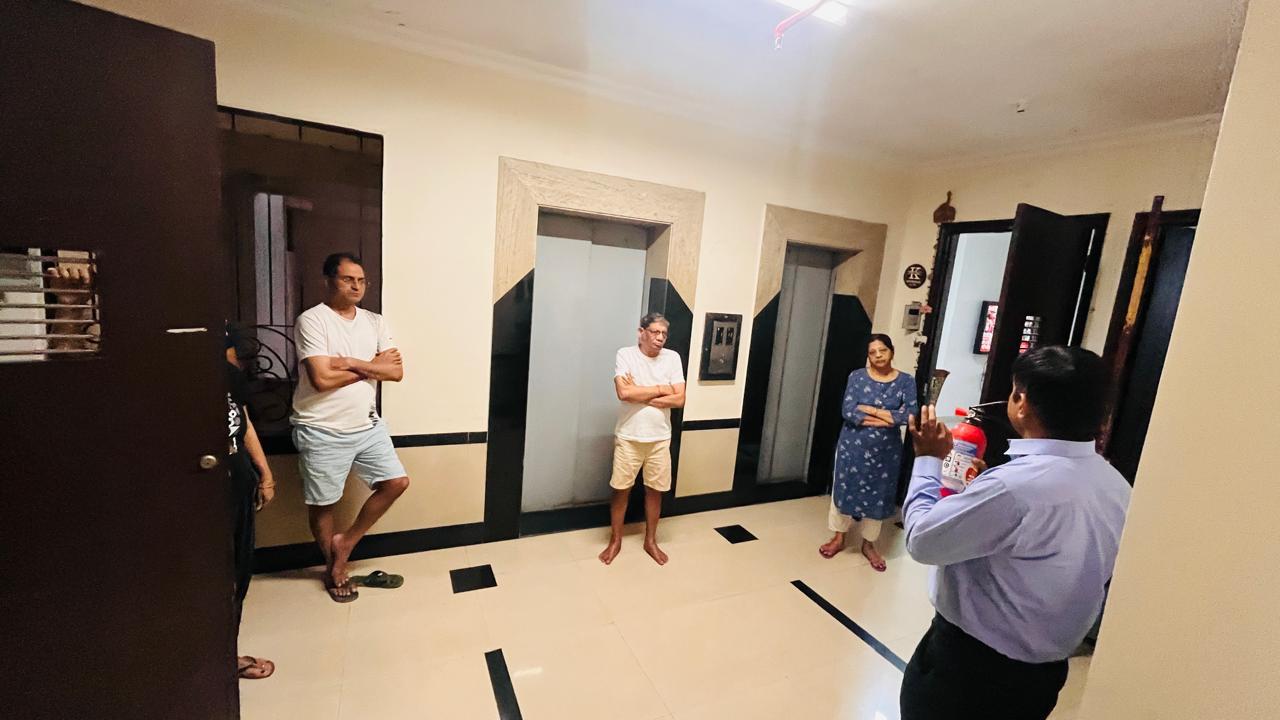

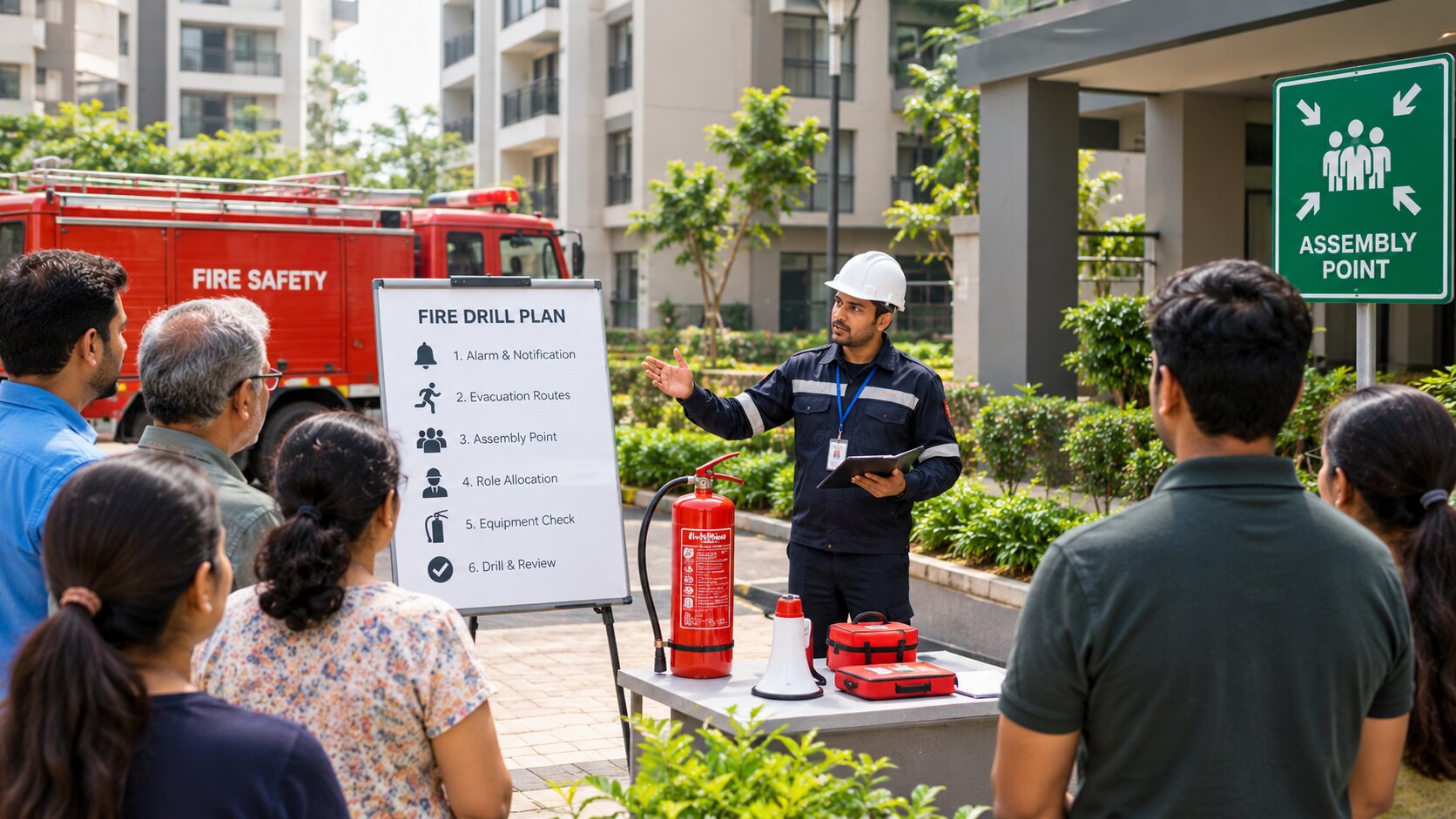
A well-run fire drill helps residents and security staff understand what to do before an emergency happens. A drill should follow the building’s approved emergency plan and be managed so that it does not create unnecessary risk or block access for emergency responders.
1. Review the building’s evacuation plan
Identify the approved exit routes, staircases, final exits, refuge areas where provided, assembly point and fire brigade access. Check that the route is accessible and is not blocked by parked vehicles, stored items or temporary work. Do not invent a route that conflicts with the building’s approved plan.
2. Assign roles before the drill
- Nominate a drill coordinator and floor or wing wardens.
- Assign people to raise the alarm, guide occupants and report floor status.
- Decide how the assembly point will record attendance and report anyone unaccounted for.
- Discuss assistance arrangements with residents who may need support, respecting their needs and consent.
3. Inform residents and staff
Tell residents the date and time window, what the alarm signal means, which routes to use and where the assembly point is located. Include security guards, housekeeping teams, domestic workers, visitors and contractors. Make instructions available in a format people can understand.
4. Conduct the exercise safely
Use the site’s approved alarm and drill procedure, and make sure the coordinator can stop the exercise if a real emergency occurs. People should move calmly and use the designated stairs. Do not use lifts unless the building’s approved plan specifically provides a designated evacuation lift and trained procedure. Keep exits and fire brigade access routes clear.
Do not use live flames or smoke-producing materials for an ordinary resident drill. Do not discharge extinguishers or operate hydrants for a demonstration unless the activity has been risk-assessed and is supervised by competent trainers.
5. Take a headcount and record observations
At the assembly point, wardens should report whether their assigned areas have cleared and whether anyone is unaccounted for. Record bottlenecks, unclear signage, alarm audibility issues, blocked doors, confusion about routes and any assistance that was needed.
6. Close improvement actions
Prepare a short report with the observations, action owner and target date. Share the key learning with residents and repeat or update the exercise when the building or its emergency plan changes. The Directorate’s July 2026 Form B guidance also refers to periodic mock fire safety drills and supporting attendance records.
Remember
A drill is not a replacement for maintenance of alarms, hydrants, sprinklers, extinguishers or fire doors. Keep equipment service records current and address defects through the building’s approved process.
Planning a resident fire drill?
Samarth Fire provides fire safety demonstrations, evacuation drills and equipment-use training. Ask about a programme suitable for your property.
This article is general information. It is not legal advice, an emergency-response instruction, a substitute for approved site drawings or a fire-safety certificate. Requirements depend on the building, its occupancy and the current rules of the competent authority — always confirm with the Directorate of Maharashtra Fire & Emergency Services or a licensed agency.