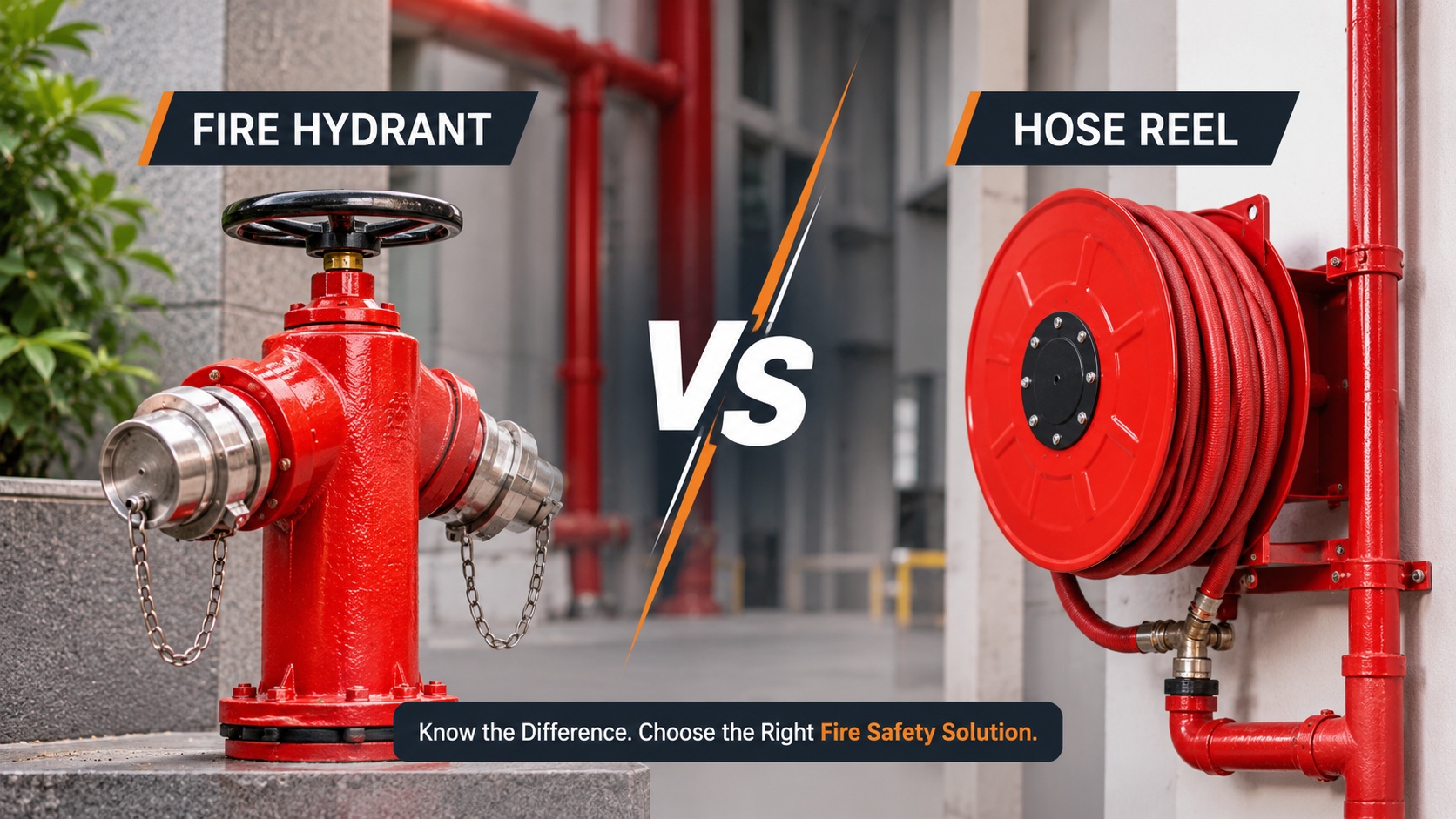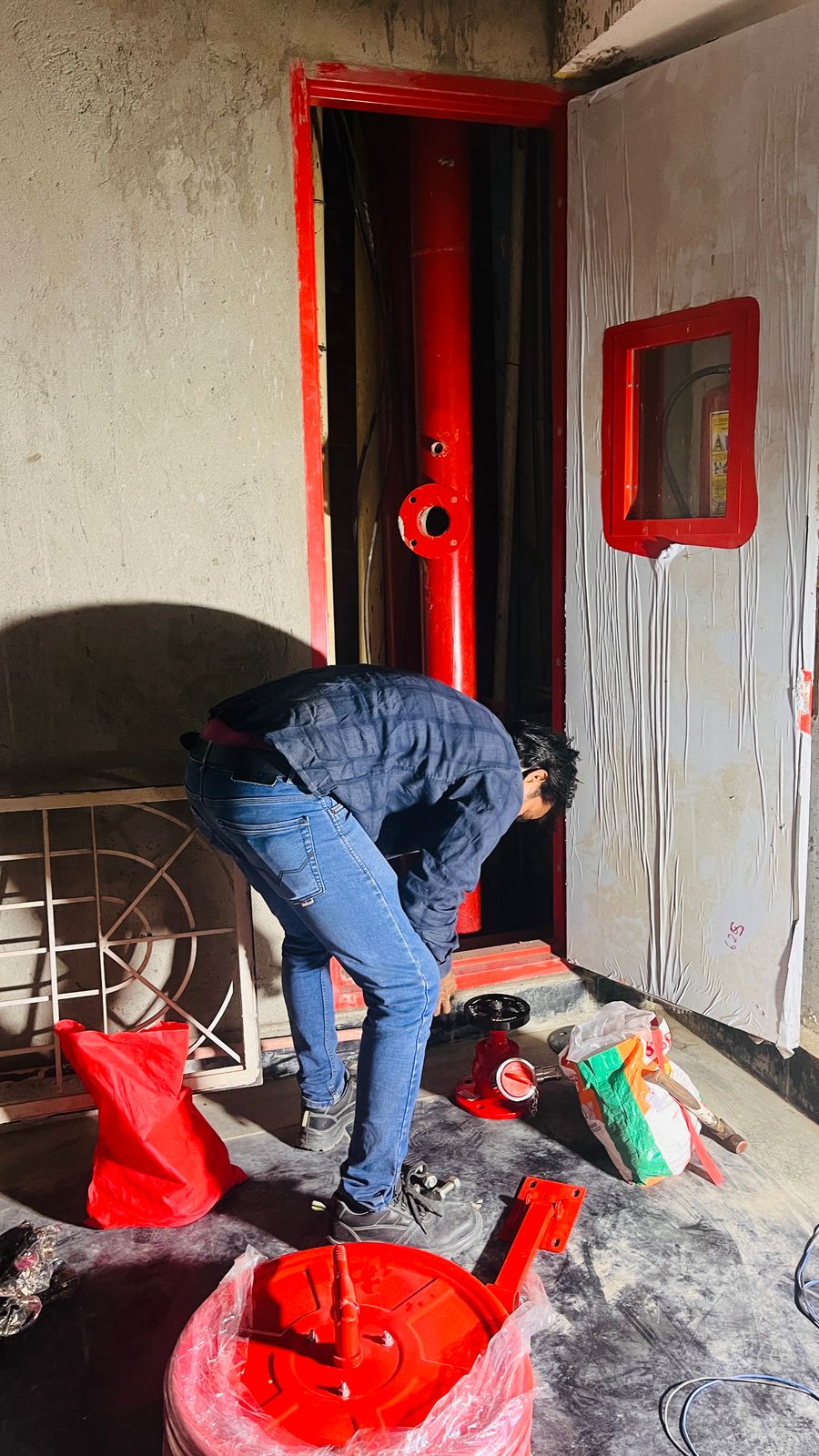

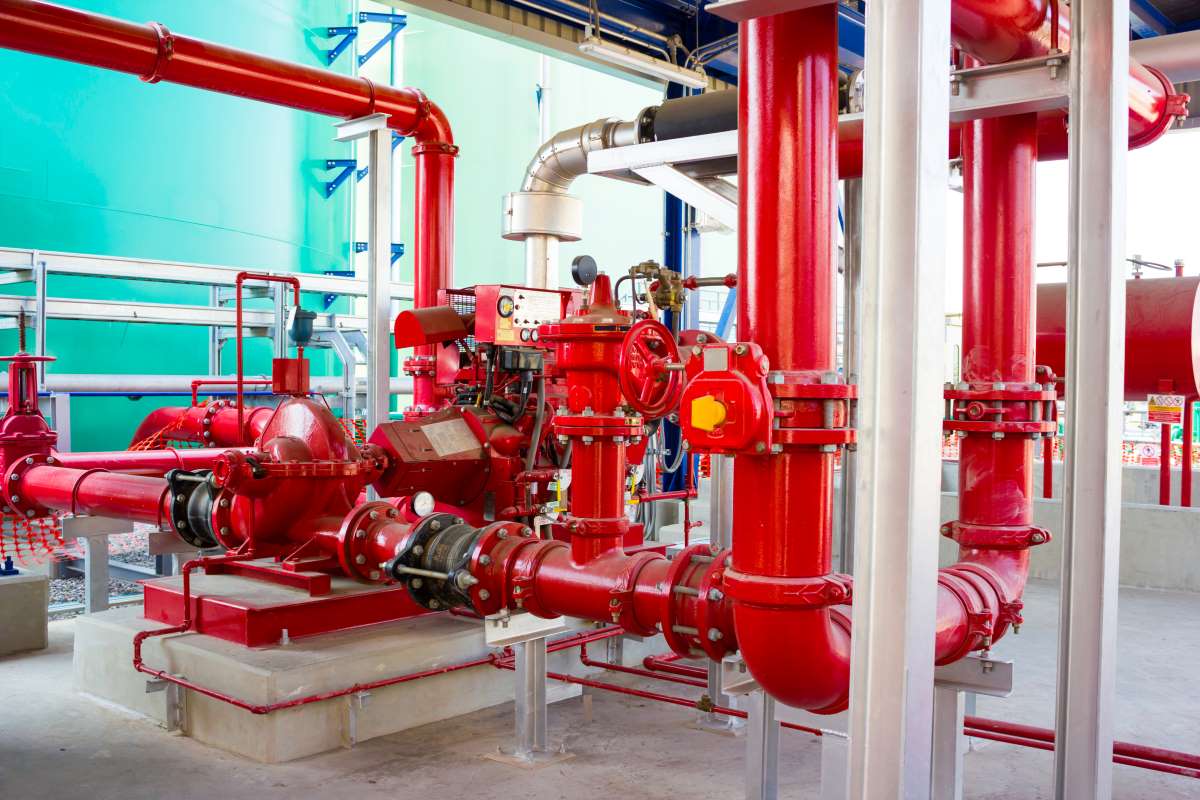
A hydrant system is only useful when water supply, pumps, valves, pipework and outlet equipment are available together. A maintenance checklist should therefore cover the complete system and keep a clear record of every inspection and test.
Know the system before testing it
Keep an up-to-date system drawing or asset register showing the pump room, water storage, risers, landing valves, external hydrants, hose reels, isolation valves and control points. Record equipment make, model and identification details where available. Identify which valves must remain in a normal position and who is authorised to operate them.
Visual condition and access
- Keep hydrant points, hose cabinets, landing valves and pump-room access clear.
- Look for visible leakage, corrosion, physical impact, damaged supports, missing caps or damaged valve handwheels.
- Check that hoses, branch pipes, couplings and nozzles are present, accessible and apparently serviceable.
- Check labels, location signs and operating instructions are legible.
- Report any signs of tampering, unauthorised isolation or missing equipment.
Pump room and water supply
Review pump controller indications, supply availability, water level records, visible leaks, unusual noise or vibration, battery and fuel readiness for diesel equipment, and the condition of ventilation and drainage. Check that the main, standby and jockey pump arrangements match the approved design and current maintenance instructions.
Functional run tests should be performed only by trained personnel under an approved method. Record the test date, pump identity, starting method, observed readings, abnormalities and corrective work. Do not improvise a test by opening outlets or changing valves without understanding the hydraulic impact.
Pressure and flow are design-specific
There is no single pressure number that can safely be copied to every building. The required pressure and flow depend on building height, system design, hydraulic calculations, pump duty, outlet location, applicable standards and approved documents. Use calibrated instruments and the defined test points and acceptance criteria for the particular system.
Set an inspection schedule that can be followed
Use the manufacturer’s instructions, approved maintenance plan, relevant standards, applicable law and the contract with the maintenance provider to set inspection and test intervals. Do not treat this general article as a universal weekly, monthly or annual schedule. Assign an owner for each task and keep missed inspections visible until they are completed.
Control impairments and repairs
If a pump, tank, riser or outlet is unavailable, record the affected area and duration, notify the building’s responsible manager, and apply the building’s approved impairment / temporary-risk-control procedure. Arrange competent repair and retesting. Do not conceal an impairment or assume an untested repair is service-ready.
Records to retain
- Asset register and current system drawings.
- Inspection, pump-run, pressure and flow test records.
- Valve status and impairment logs.
- Service reports, replaced parts and calibration details.
- Defect register with closure and retest evidence.
These records also support a building-specific review for statutory maintenance and certification requirements.
Important safety note
Hydrant testing can create high-pressure water discharge and can affect fire-system readiness. Testing, isolation and reinstatement must be planned and supervised by competent personnel. For State-specific requirements, refer to the Maharashtra Fire & Emergency Services Acts and Rules.
Ready to Discuss Your Fire Safety Requirements?
Samarth Fire Protection System provides licensed system installation, maintenance (AMC), testing and compliance certification across Mumbai and the wider MMR.