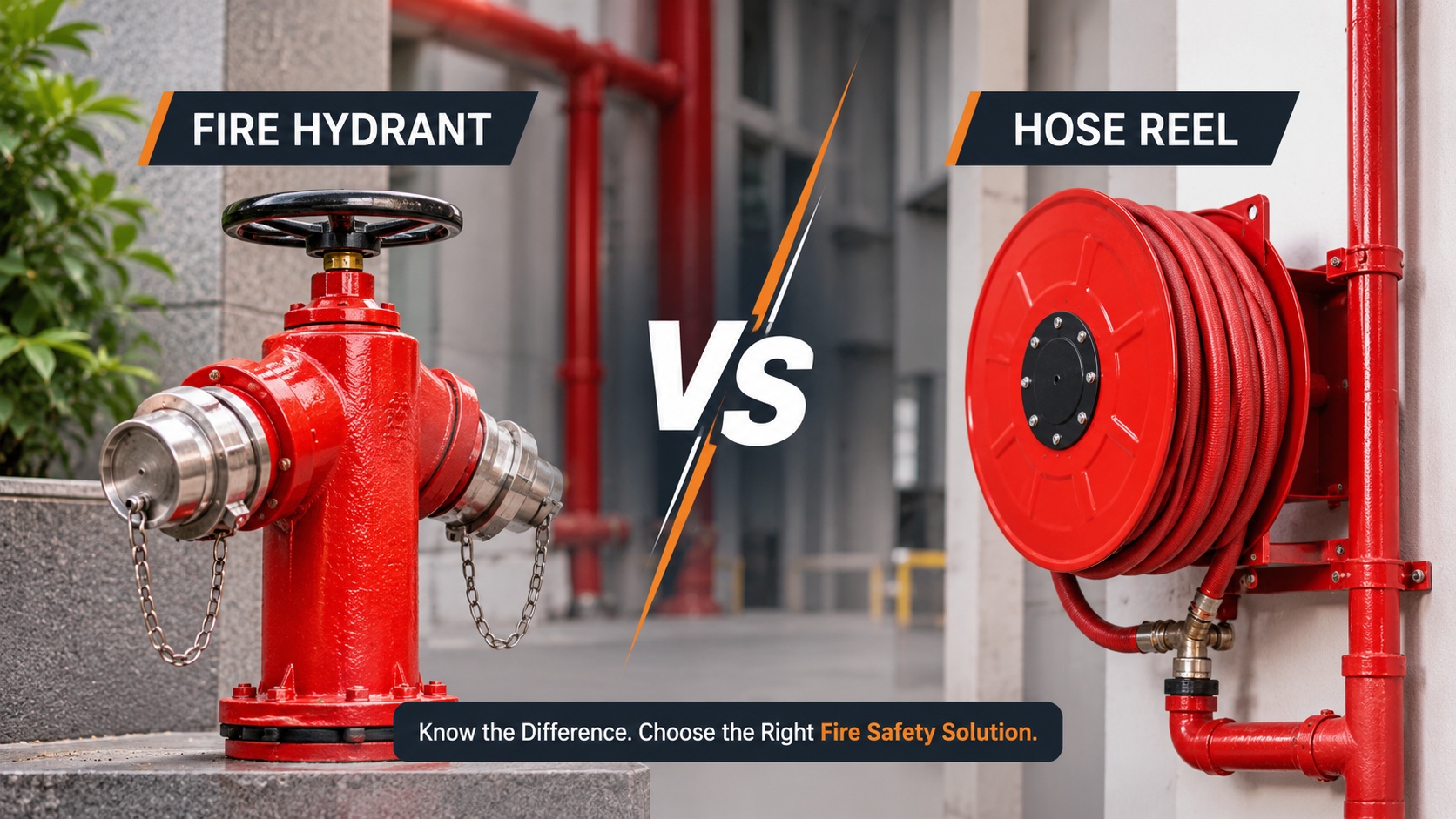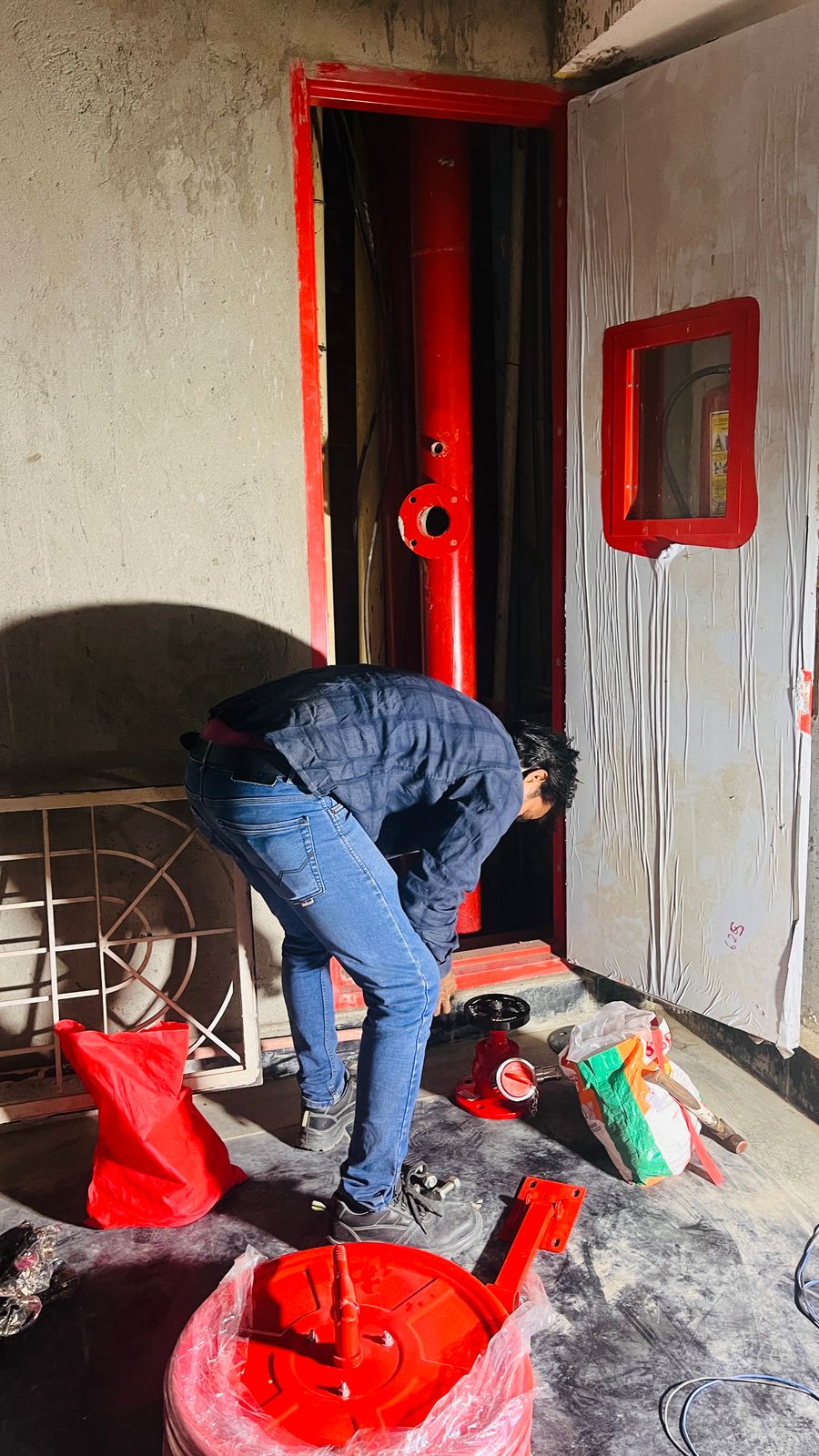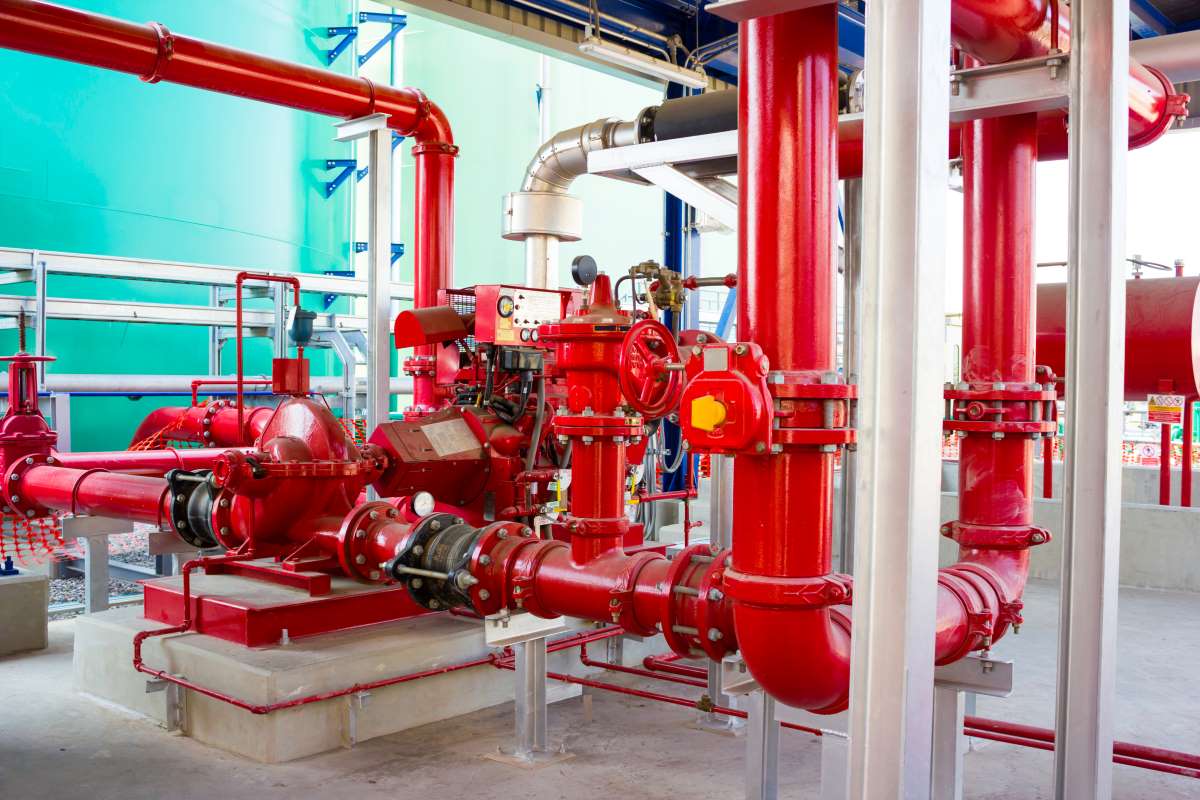

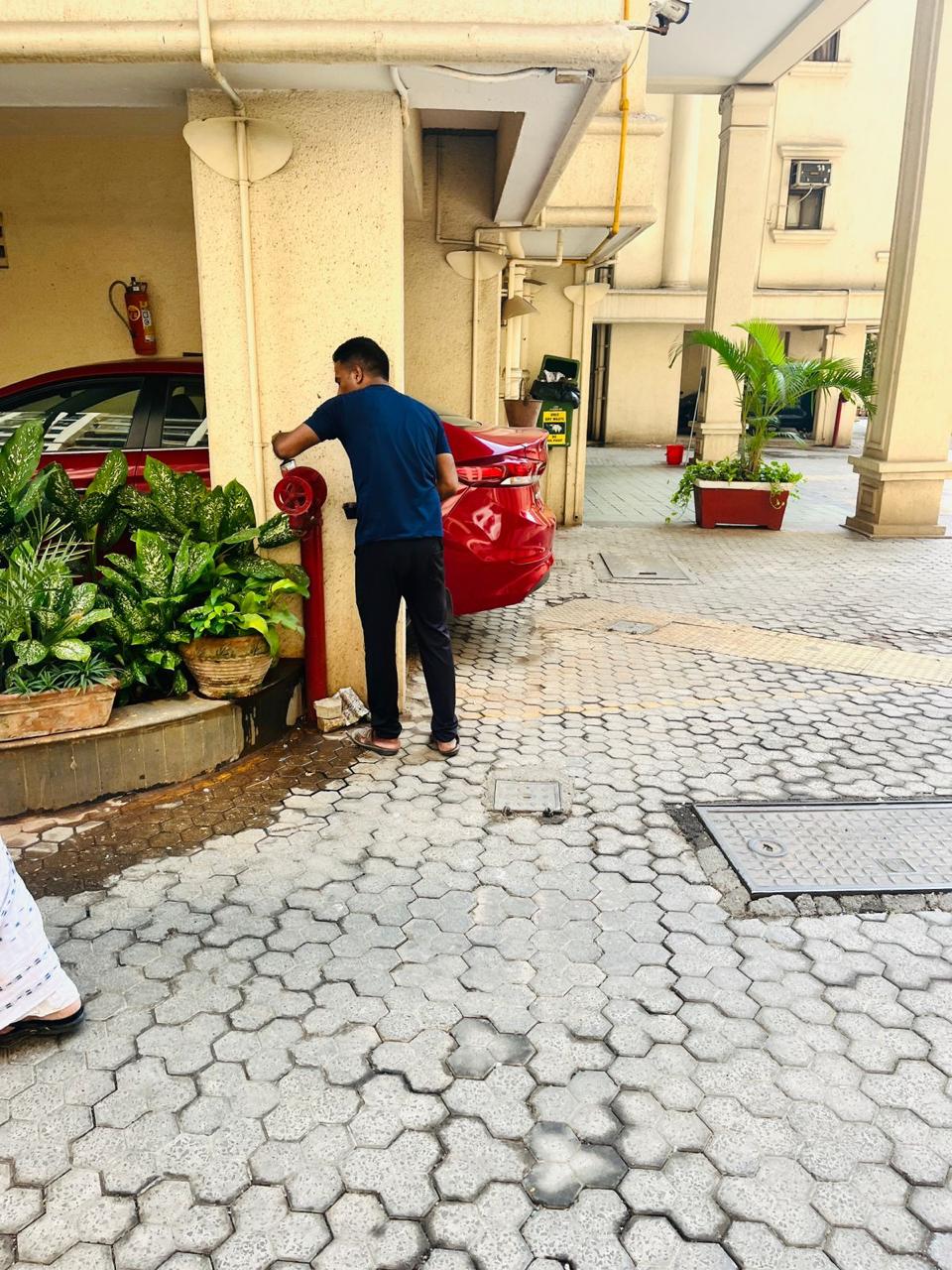
Fire hydrants are not maintained by looking at one red cabinet. A building’s water-based fire protection system may include a tank, main and standby pumps, jockey pump, riser pipes, landing valves, external hydrants, hose reels, hoses, branch pipes and a fire brigade inlet. The maintenance plan should match the system that is actually installed.
1. Keep an equipment list and system drawing
Keep a current drawing or asset register showing the pump room, tanks, risers, landing valves, external hydrants, hose reels, isolation valves and fire brigade inlet. Record pump make/model and duty details, valve identification and the normal position of valves that should remain open. This helps the facility team identify missing equipment and report a problem accurately.
2. Check visible condition and access
- Keep hydrant points, hose cabinets, pump-room access and fire brigade approach routes clear.
- Look for leakage, corrosion, impact damage, missing caps, damaged handwheels or damaged pipe supports.
- Check hose reels, hoses, couplings, branch pipes and nozzles are present and accessible.
- Ensure landing valves, hydrants and hose cabinets are clearly identified and not blocked by storage or parked vehicles.
- Report any valve that appears isolated or tampered with; do not change its position without authorisation.
3. Review the pump room and water supply
Check visible controller indications, power availability, water-level records, leakage, unusual noise or vibration and general housekeeping. For diesel pumps, the maintenance plan should cover the fuel, starting battery and other engine checks specified by the manufacturer. Main, standby and jockey pump duties should match the approved design and system documentation.
Functional pump runs and flow tests should be performed by trained personnel using the approved test method. Record the equipment tested, date, readings, observed issues and corrective actions. Do not create a water discharge or operate valves as an informal demonstration.
4. Pressure and flow values are design-specific
There is no single pressure or flow figure that can be copied safely to all buildings. The required performance depends on building height, hydraulic calculations, pump duty, the most demanding outlet, the approved design and applicable standards. Use the designated test points and acceptance criteria for that installation, with suitable calibrated instruments.
5. Make faults visible and track them to closure
If a pump, tank, riser or outlet is unavailable, record the affected section and inform the responsible building manager. Apply the site’s approved impairment and temporary risk-control procedure, arrange competent repair and retest the system before closing the defect. A repair invoice alone does not prove that the system has been restored and tested.
6. Keep these records together
- Current system drawings and equipment register.
- Pump-run, flow and pressure test reports as applicable to the system.
- Valve status, inspection and impairment logs.
- Service reports, parts replaced and calibration records.
- Defect register with action owner, closure date and retest evidence.
Relevant Indian Standards
The Directorate’s July 2026 Form B guidance refers to standards for external and internal hydrants, pumps, hose reels, hoses, couplings and landing valves. Check the latest Maharashtra Fire Services circulars and use the current standards relevant to the system. Testing and isolation must be planned by competent personnel; this checklist is not a substitute for the approved design or maintenance procedure.
Need a hydrant system inspection or maintenance visit?
Samarth Fire works on fire fighting systems, including hydrants, hose reels, pumps and related maintenance. Share your building details to discuss the scope.
This article is general information. It is not legal advice, an emergency-response instruction, a substitute for approved site drawings or a fire-safety certificate. Requirements depend on the building, its occupancy and the current rules of the competent authority — always confirm with the Directorate of Maharashtra Fire & Emergency Services or a licensed agency.