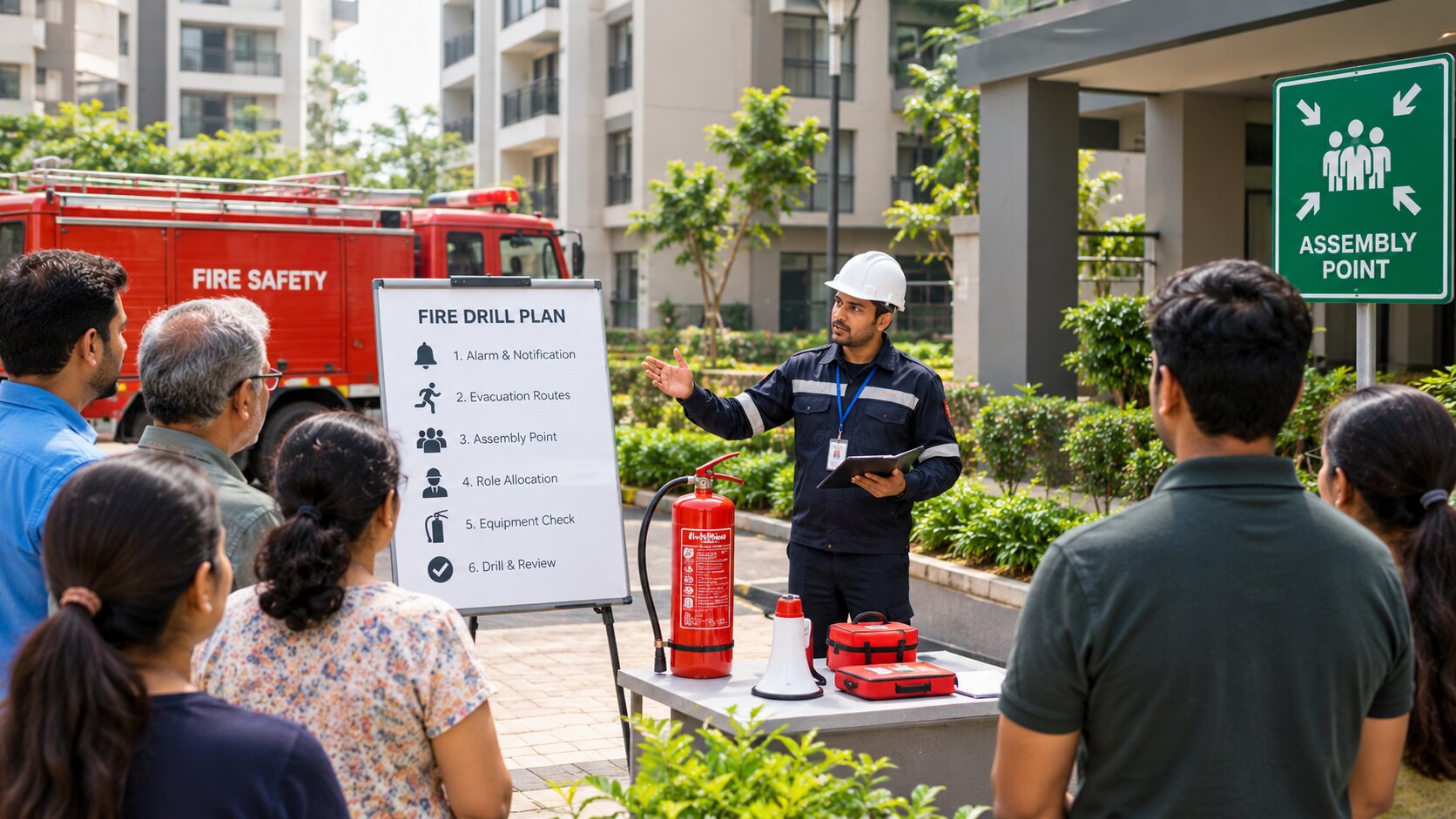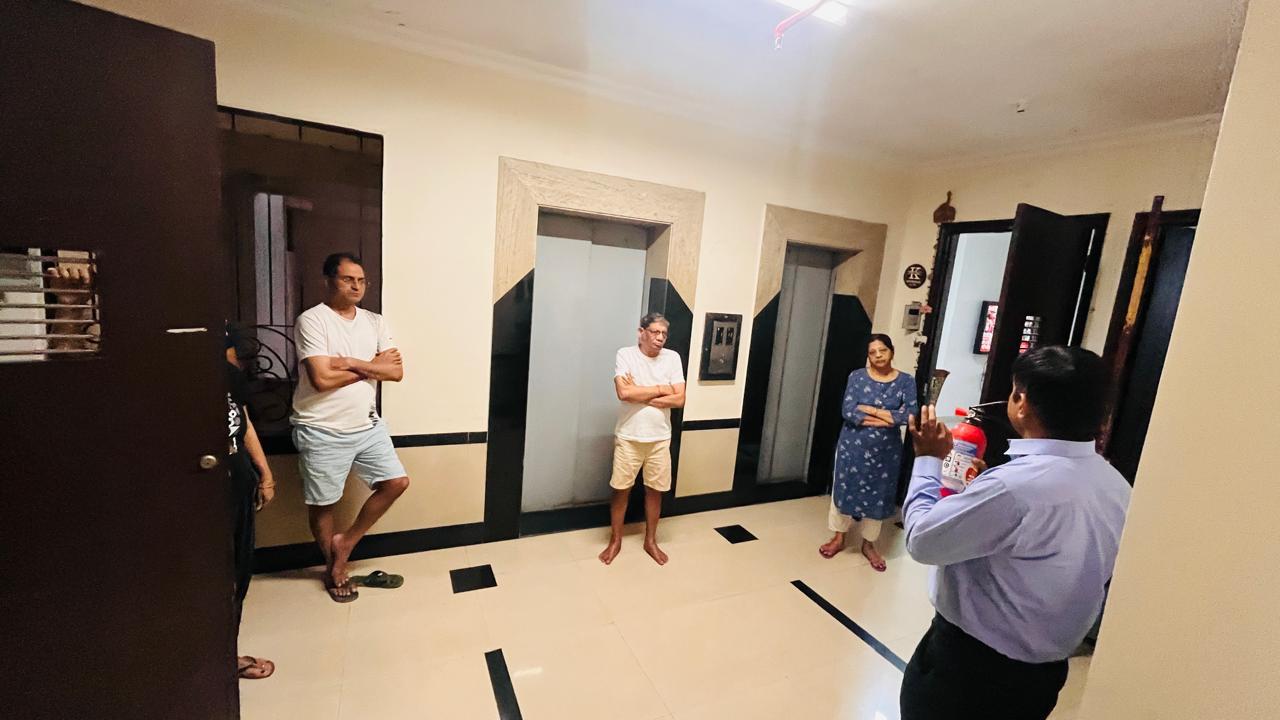

A fire drill is useful when residents know what the alarm means, where to go and whom to follow. It should be planned for the building’s actual layout and residents—not conducted as a surprise exercise that creates avoidable risk.
1. Plan around the building
Review the approved evacuation plan, staircase and exit locations, basement routes, refuge areas where applicable, assembly point and access for emergency responders. Identify alternate routes and any areas that may be unavailable during a real incident. Do not invent an escape route that conflicts with the approved plan.
2. Assign clear roles
- Appoint a drill coordinator and floor / wing wardens.
- Assign people to raise the alarm, guide movement and report floor status.
- Identify residents, visitors or staff who may need assistance and plan support with their consent.
- Agree how the assembly point will record people and communicate missing-person information to responders.
3. Tell residents what to expect
Share the date, time window, alarm signal, route guidance, assembly location and expected behaviour in advance. Provide accessible information for children, older residents, people with disabilities, domestic workers, security teams and visitors. Explain how the drill will be stopped if an actual emergency occurs.
4. Conduct the exercise safely
- Use the site’s approved alarm / drill procedure and a coordinator who can stop the exercise.
- Use designated staircases and keep exits, landings and fire-service access routes clear.
- Do not use lifts during evacuation unless the approved emergency plan specifically provides a designated evacuation lift and trained procedure.
- Do not run, push, return for belongings or re-enter until the responsible authority says it is safe.
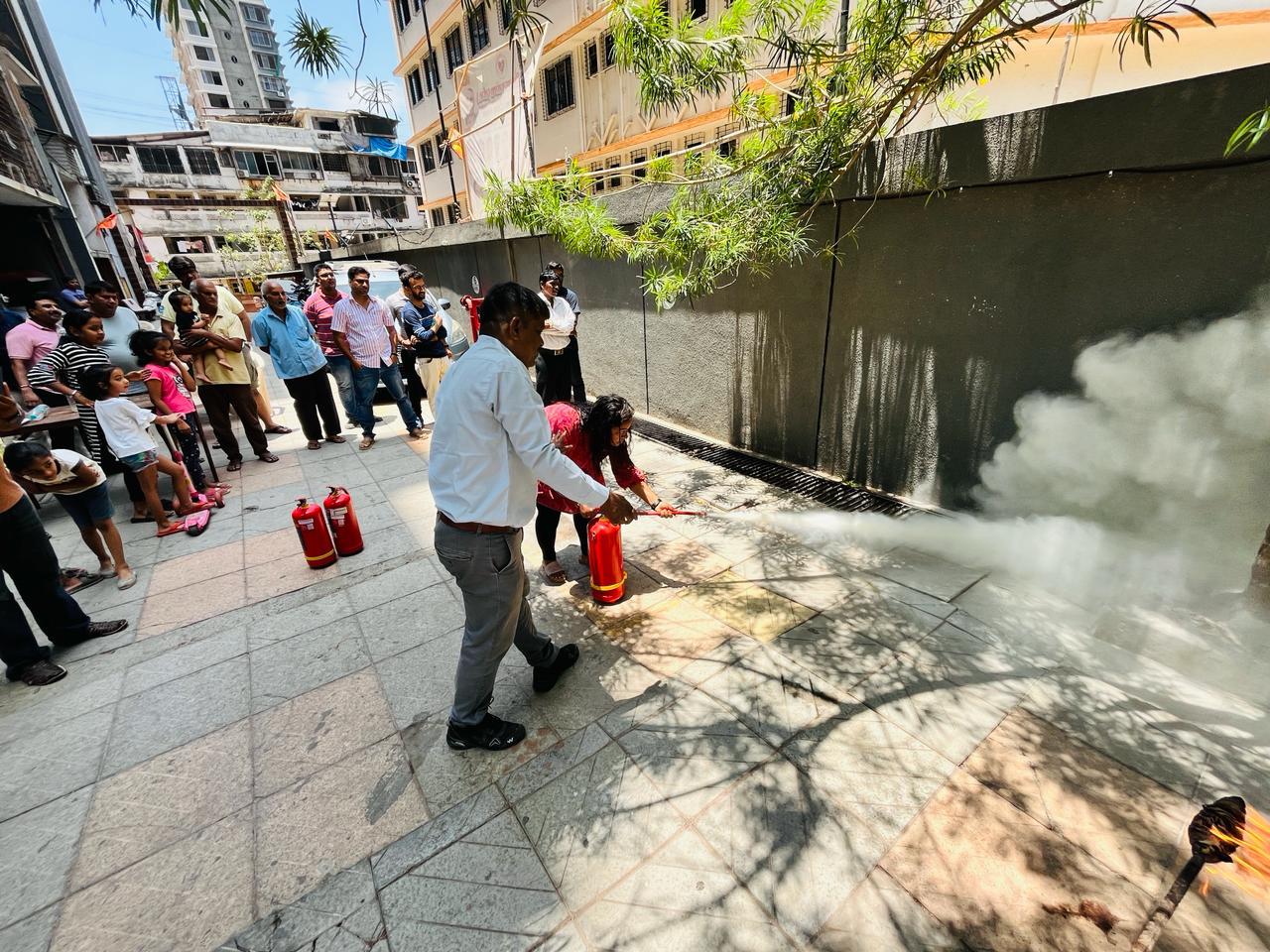
- Do not use live flames or smoke-producing materials for an ordinary resident drill.
- Do not discharge extinguishers or operate hydrants for demonstration unless the exercise is specifically designed, risk-assessed and supervised by competent trainers.
5. Review the drill and close actions
Record the time taken, route bottlenecks, blocked doors, alarm audibility issues, residents who needed assistance, confusion about assembly points and any unsafe behaviour. Assign each improvement to a person with a due date. Share a short summary with residents and repeat the exercise after major changes to the building or emergency plan.
Common mistakes to avoid
- Announcing an evacuation but not checking if the route is safe.
- Failing to count residents or report people unaccounted for.
- Blocking the assembly point or fire-engine access with parked vehicles.
- Ignoring residents who cannot use stairs independently.
- Treating a drill as a one-off event with no written corrective actions.
Local requirements
Follow the building’s approved fire and emergency plan, applicable local requirements and instructions from the competent authority. The Maharashtra Fire & Emergency Services publishes official fire-safety resources.
This guide is general resident-awareness material, not a replacement for a site-specific evacuation plan or professional training.
Ready to Discuss Your Fire Safety Requirements?
Samarth Fire Protection System provides licensed system installation, maintenance (AMC), testing and compliance certification across Mumbai and the wider MMR.