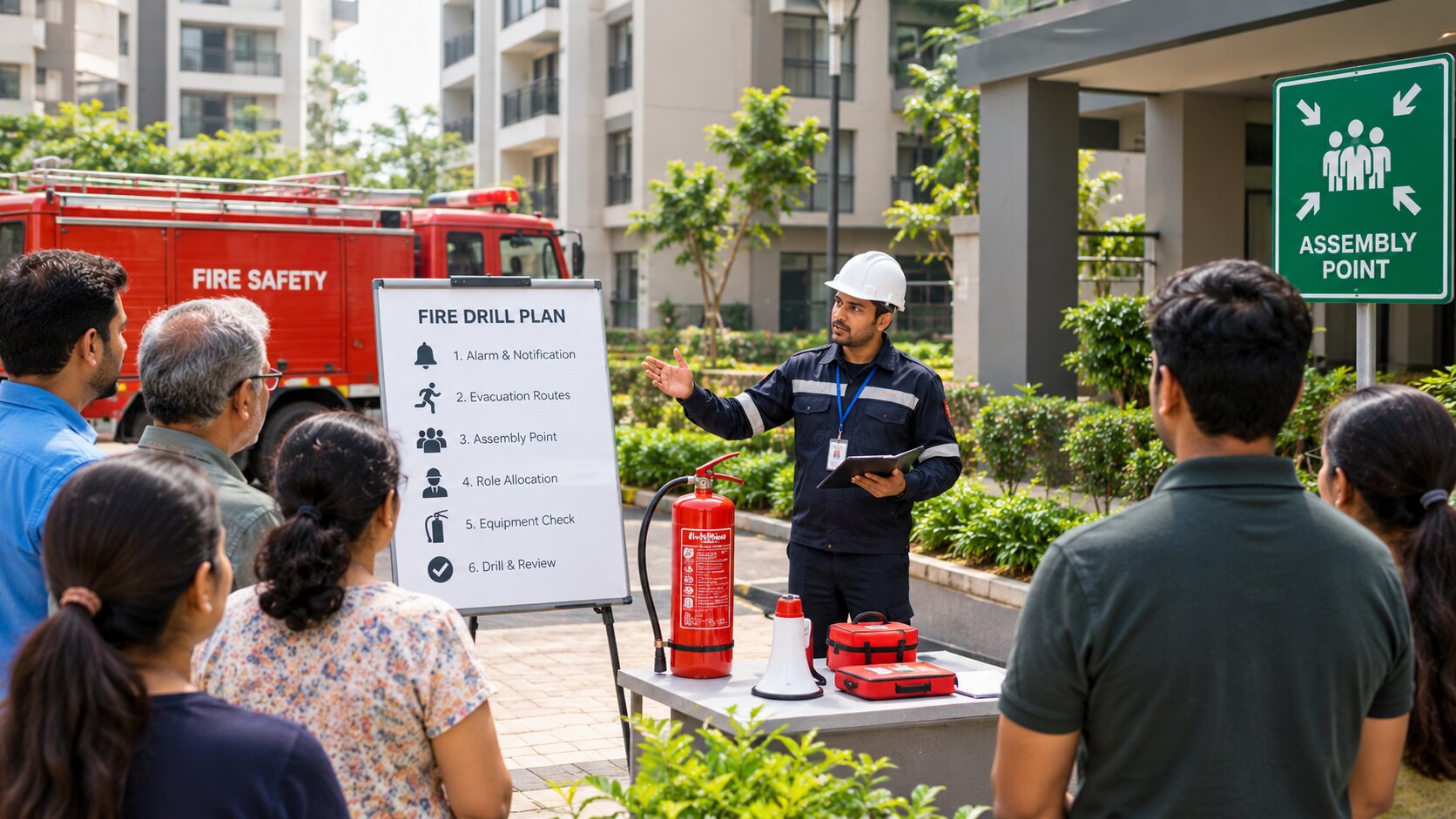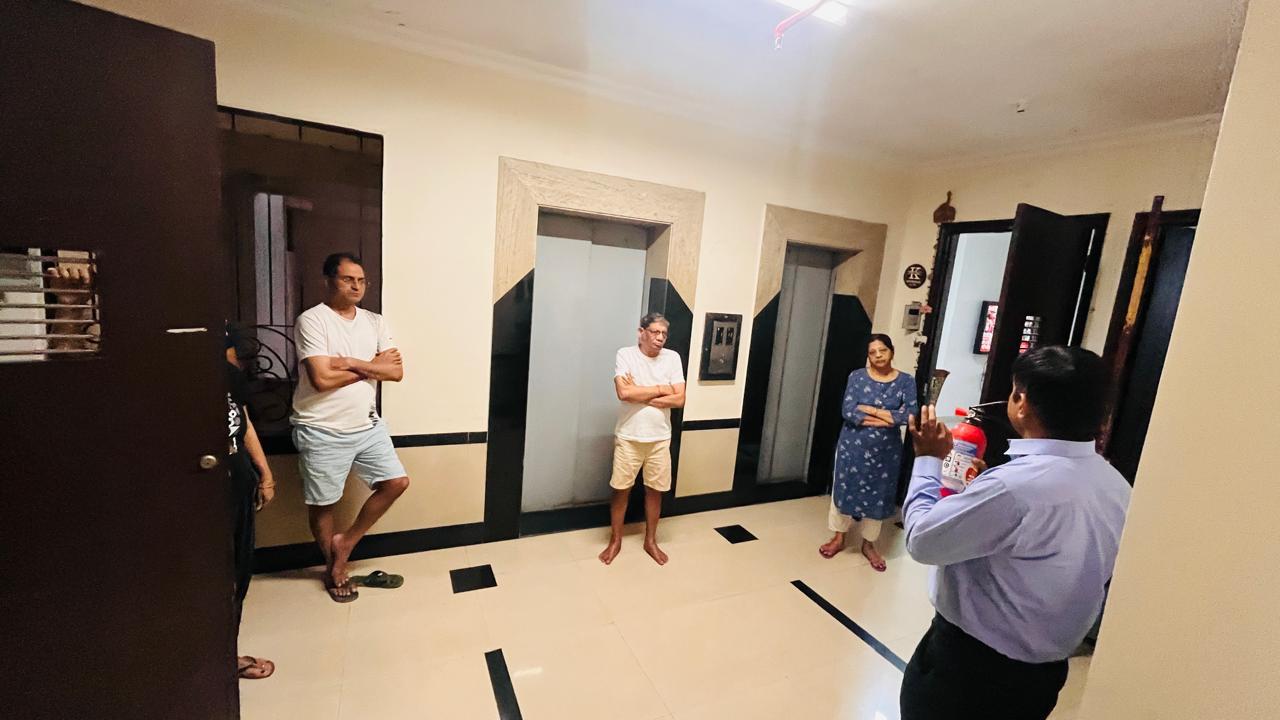


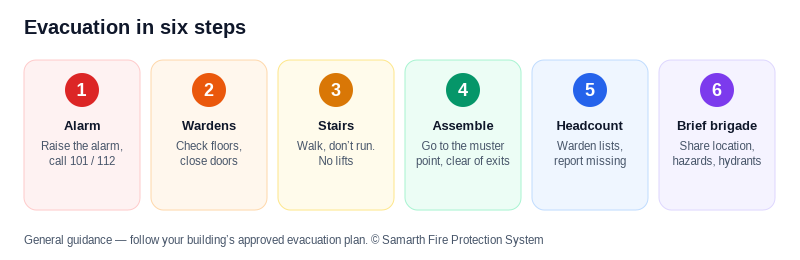
Evacuation plans fail when they are too complicated to remember under stress. These six steps cover the sequence that matters most — and each links to where you can go deeper.
1. Raise the alarm
Activate the nearest manual call point if one is available, shout to alert neighbours, and call the fire brigade on 101 (or 112) immediately — don't assume someone else already has.
2. Floor wardens act
Trained wardens sweep their assigned floor, direct people to the nearest safe exit, and close doors behind them as they leave — closed doors slow fire and smoke spread significantly.
3. Use the stairs — never lifts
Walk, don't run, to the nearest stairwell. Lifts can lose power or open directly onto a fire floor, and must never be used during an evacuation.
4. Go to the assembly point
The designated muster point should be clearly marked, known in advance by every resident or staff member, and positioned clear of building exits and the fire brigade's access route.
5. Take a headcount
Each warden confirms everyone from their floor or department is present at the assembly point, and reports any missing person to the fire brigade immediately on arrival — this single step is often what finds someone in time.
6. Brief the fire brigade
When the fire brigade arrives, someone familiar with the building should be ready to share the fire's location, any known hazards (gas cylinders, chemical storage), and where hydrants and risers are located.
A plan only works if it's practised
Wardens should be nominated and trained in advance, and the sequence rehearsed through regular drills — see our housing society fire drill guide for how to plan one.
Want this drilled with your residents or staff?
Samarth Fire runs hands-on evacuation drills, warden briefings and extinguisher training for housing societies, schools and workplaces.
This article is general information. It is not legal advice, an emergency-response instruction, a substitute for approved site drawings or a fire-safety certificate. Requirements depend on the building, its occupancy and the current rules of the competent authority — always confirm with the Directorate of Maharashtra Fire & Emergency Services or a licensed agency.