
A fire extinguisher is useful only when it is the right type for the risk, easy to reach and in serviceable condition. A quick visual check by the building team is important, but it does not replace maintenance by a competent service provider.
What should be checked during a routine inspection?
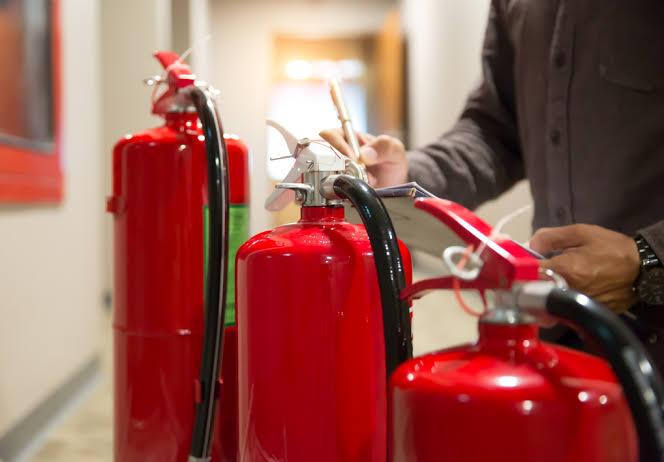
Check that each extinguisher is in its assigned place, visible and not blocked by furniture, storage or parked equipment. The operating instructions should face outwards and be readable. Look for a missing or broken seal, visible damage, corrosion, leakage, a blocked nozzle or a pressure indicator outside its marked operating range (where a gauge is fitted).
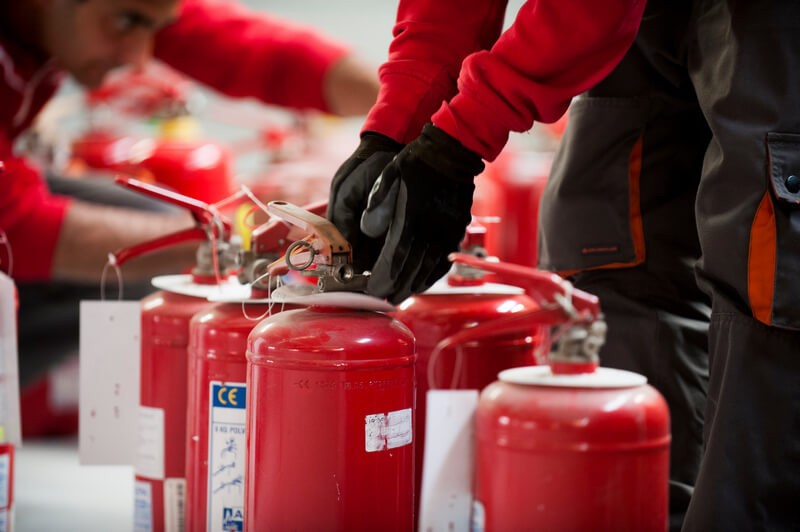
Also check the bracket or cabinet, identification number, inspection label and any hydrostatic pressure test (HPT) tag. Record a defect and arrange corrective action; do not quietly return an unserviceable extinguisher to its bracket.
How often should fire extinguishers be checked?
Indian Standard IS 2190:2024 says extinguishers should be checked when first placed in service and thereafter at approximately 90-day intervals. It also says they should be checked more frequently when circumstances require. These checks are different from a full maintenance visit.
The same standard specifies maintenance once a year, but not less than six months apart, as well as at the time of hydrostatic testing and whenever an inspection indicates it is needed. The exact procedure depends on the extinguisher type and the standard’s relevant category and clauses. Follow the current standard and the manufacturer’s instructions.
Read the Bureau of Indian Standards (BIS) listing for IS 2190:2024 and the published standard text.
When does an extinguisher need refilling?
Rechargeable extinguishers should be recharged after any use, even if only a small amount was discharged, or when an inspection or maintenance check identifies a deficiency. Use only the extinguishing medium specified on the extinguisher label and follow the manufacturer’s instructions. A partially used extinguisher should not be put back into service as if it were full.
If a cylinder is leaking, damaged, corroded, discharged or outside its operating range, arrange service and provide suitable replacement protection while it is unavailable.
What is hydrostatic pressure testing (HPT)?
HPT checks whether an extinguisher cylinder can safely withstand the test pressure specified for its design. The test interval and method are not identical for every extinguisher type. Ask the service provider to check the applicable standard, cylinder markings and previous test record, and to update the tag or service record after testing.
What should the building keep on record?
- Extinguisher identification number, type, capacity and location
- Routine inspection date and any defects found
- Maintenance, refilling and HPT reports
- Service provider details and work completed
- Replacement extinguisher details while a unit is away for service
What should you ask an extinguisher service provider?
Ask the provider to identify the extinguisher type and condition, explain why it needs refilling or testing, show the relevant service record and return it with its operating instructions and required tags intact. The number and type of extinguishers at a property should be based on the building’s actual risks and applicable requirements—not a one-size-fits-all online estimate.
Important safety note
Do not dismantle, recharge or pressure-test an extinguisher yourself. If there is a fire, raise the alarm and follow the building’s evacuation plan. Only use a suitable extinguisher on a small fire if you are trained, have a clear escape route and it is safe to do so.
Need extinguisher servicing or a site check?
Samarth Fire supplies, installs, inspects, refills and maintains fire extinguishers. Tell us your location, extinguisher type and quantity so we can confirm the work required.
This article is general information. It is not legal advice, an emergency-response instruction, a substitute for approved site drawings or a fire-safety certificate. Requirements depend on the building, its occupancy and the current rules of the competent authority — always confirm with the Directorate of Maharashtra Fire & Emergency Services or a licensed agency.